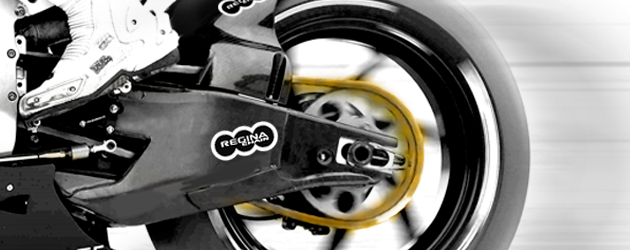
The chain transmission
In the motorcycle field the chain offers high reliability, versatility
and an excellent efficiency rating (more than 97%).
By following a few simple
directions, it is possible to utilize its full efficiency and at the same
time eliminate obstacles to obtaining a safe and long life.
In fact, a choice
of low quality components, poor assembly or inadequate maintenance could
compromise the performance and safety of the chain.
It is necessary therefore to follow
all the information about the selection, assembly and maintenance of the chain.
In these pages Regina intends to supply practical suggestions for proper installation,
use and maintenance of the chain drive and all the components.
Regina supplies the specific tools to perform all operations.
 |
|
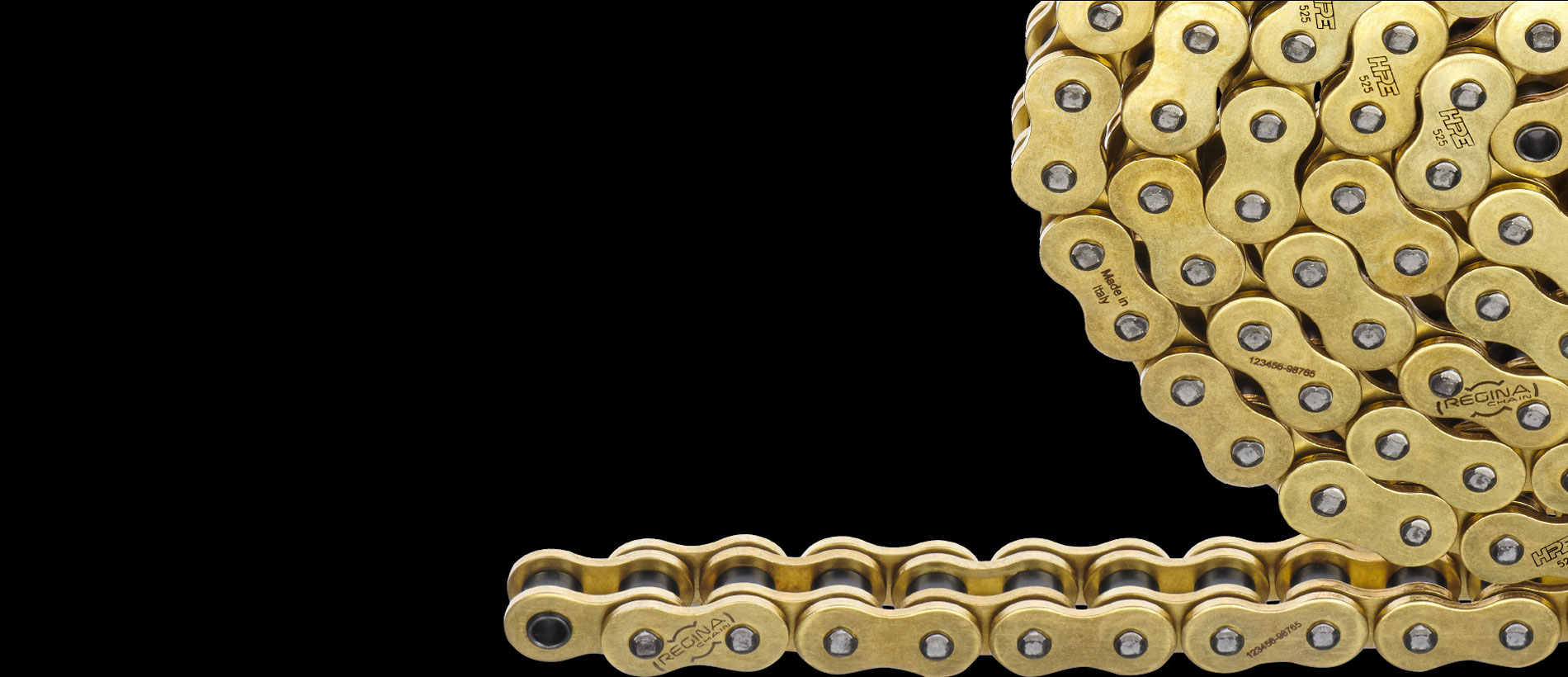
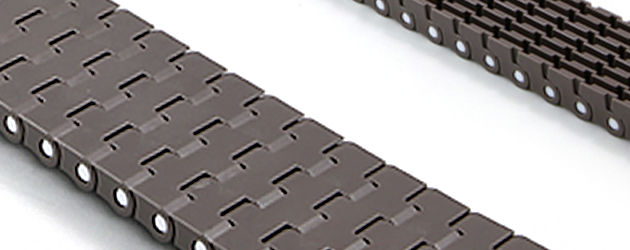
A drive chain, engaging on front and rear sprockets, transmits the power from the engine to the rear wheel.
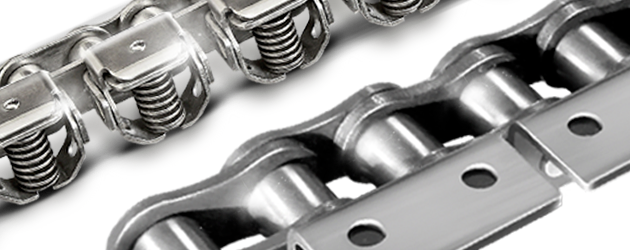
A chain is composed of roller links (A) and pin links (B), connected to each other.
In order to join the two ends of a chain together, it is necessary to use connecting links. |
 |
| A |
Roller link |
| B |
Pin link |

| Types of connecting links |
Slip fit link type 26
This connecting link, although easier to be installed, does not offer the same safety level as a press fit link or a rivet link. For this reason it is recommended not to use a slip fit link for motorcycles having a displacement over 250 cc. |
 |
| C |
Connecting link fork |
| D |
Outer plate |
G |
Connecting plate |
| E |
Connecting pin |
H |
Spring clip |
| F |
Groove |
I |
O-Ring |
Press fit link type 42
This link is a good compromise of installation and the safety level, as it is much more resistant to fatigue than the slip fit connecting link type 26. It should be used only for low power applications on motorcycles having low displacement (max 400 cc) or for short distances at moderate speed. |
 |
| C |
Connecting link fork |
F |
Groove |
| D |
Outer plate |
H |
Spring clip |
| E |
Connecting pin |
I |
O-Ring |
Rivet link
This is the safest link to join a chain; the only one that could guarantee the same resistance to fatigue as all the other links of the chain. |
 |
| D |
Outer plate |
L |
Rivet link fork |
| I |
O-Ring |
M |
Rivet pin |
|